Another busy month. I’m still working on the project that I can’t talk about, although that might be changing soon. I’ve been talking with the publisher about getting some stuff in order which could lead to an official announcement. I don’t think I can mention any more than that though.
I’ve spent another month working on the project which I’m not allowed to identify – at least explicitly. Needless to say, it’s taking up almost all of my working time, and it’s proving to be pretty big – both in the sense of what it might end up being and in the sense that it’s probably going to clock in at a pretty hefty word count.
That being said, I suspect there are a few things I can say about it that might give you some hints as to what it’s about without violating my NDA:
1: It’s interactive fiction (which might seem self-evident, given what I normally do for a living)
2: It’s different in a lot of ways from anything I’ve written before.
3: It’s licensed work – which explains the NDA.
Obviously that’s not a lot to go on, but it should give you some idea of what I’m working on – at least until I’m able to reveal it for real.
Another month, which means more work on the project I can’t talk about yet. I’ve finished the first Act (out of five) now, which means I should be on track to finish up sometime around the beginning of next year, barring unexpected delays, personal crises, or scope creep.
After that, Wars of Infinity is probably on the docket, though I obviously can’t guarantee how long that will take.
Still working on that project I can’t talk about. Now that outlining’s done, I’ve started working on it in earnest, with the prologue just finished this morning.
It should be a less expansive project than Lords of Infinity was, although that’s not really saying much. It does at least mean that it’ll probably only a year or two before I finish up with it and start on Wars of Infinity – although it’ll still be a while before I can reveal what it actually is.
New year, still working on the new project I can’t talk about.
I’m well over 100 000 words with it now, although the Phase 2 skeleton isn’t quite finished. However, almost all of the mechanical skeleton for the main story is about done, which means I only have the last branch of the last chapter and the epilogues (there will be multiple endings, and they will be quite different, based on your choices throughout the story) left to do before I can take a step back, make some revisions, and then start filling in all that placeholder text.
Hopefully, somewhere around that point, I’ll be allowed to break NDA.
Another busy month this time around. I’ve been finishing up the phase two skeleton for the project I still can’t talk about. I’m almost done now, and I suspect I’ll be finished that part sometime at the end of this month or the beginning of the next one. Note that while I’ve been calling it a skeleton, it’s really more like a pared down version of the final product which will have full mechanical function and probably more than 100 000 words of text and code.
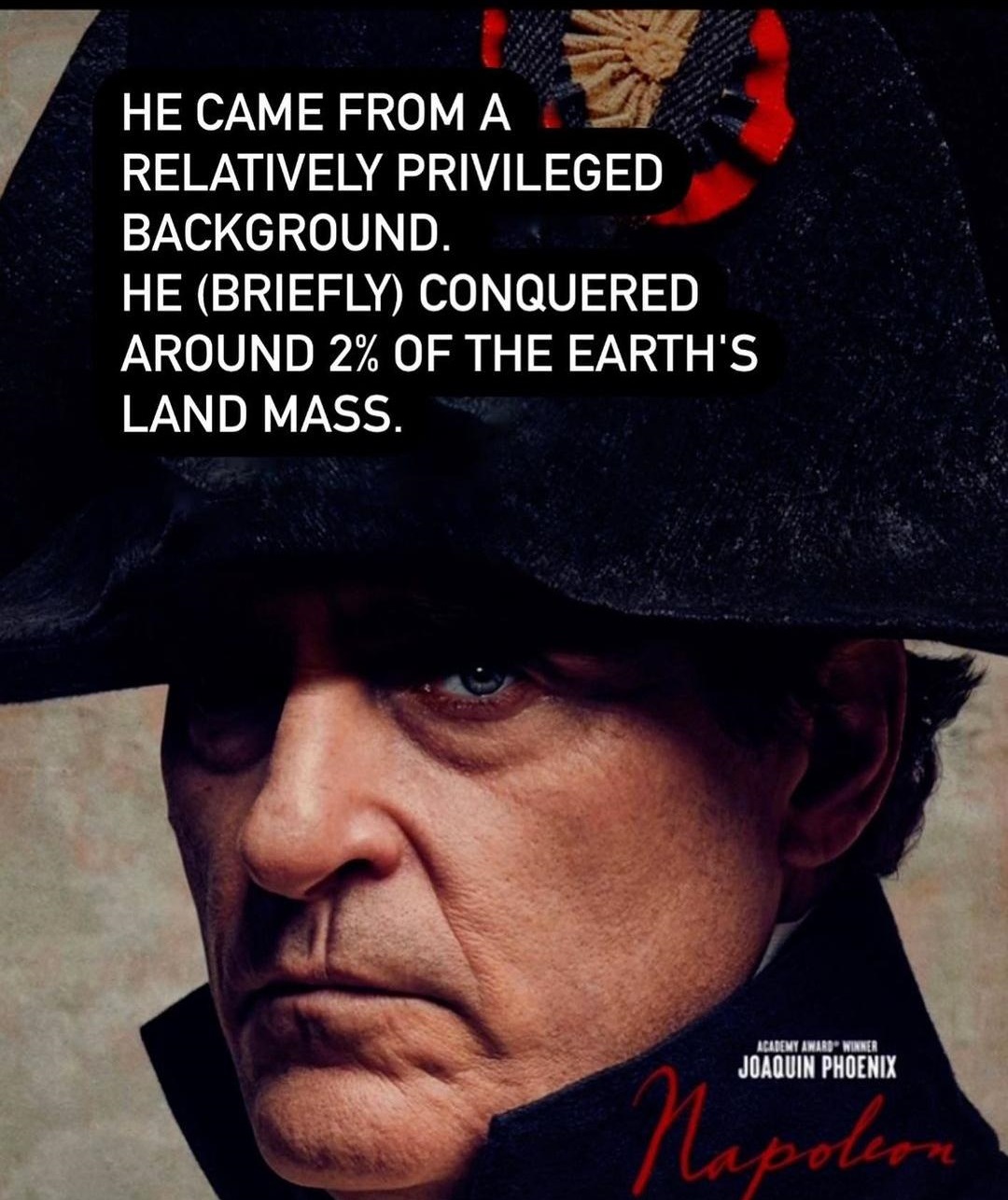
As some of you may know, I maintain just a teeny bit of interest inlate 18th and early 19th century European history. Some of you may also know that Sergei Bondarchuk’s much-maligned 1970 battle epic Waterloois my favourite film of all time. Needless to say, when I learned that Ridley Scott (director of another of my favourite movies, The Duellists) was making a Napoleon biopic, I was very happy.
Well, I went to go see it today, and my opinions about it are… complicated, to say the least, complicated enough to break them down in an uncharacteristically unscheduled blog post.
Needless to say, the following includes spoilers for a very recent film, so if you haven’t seen it yet, you might want to duck out. Alternatively, if you want my opinion on whether this is a movie worth seeing, it’ll be here below, and the spoilers I will be talking about are either part of, or alterations of the established historical record.
The one thing I went in to the theatre afraid of was that this movie was going to be a hagiography, a sort of story which elevates its subject into a larger than life figure without moral or technical blemish. I can assure you that Napoleon isn’t that. In my study of the man himself, I’ve often concluded that he comes off less as a moral paragon, and more as a petty dickhead who happens to be good at playing to an audience and commanding armies. The diaries of his Grand Equerry (and sometime ambassador to Russia) Armand de Caulaincourt show a portrait of a vain and capricious man who would easily veer into spite when defied or contradicted. One of my favourite aspects of Waterloo (which is also something which I suspect others would disagree with me on) is how Rod Steiger’s portrayal of Napoleon brings that across.
Joaquin Phoenix’s Napoleon is much the same, although in perhaps a more composed way. While there are times when he puts on the costume of a Great Man of History, it is very much a costume, one which is often discarded in moments of frustration, anger, or impending failure. Even his famous physical courage has a certain manic quality to it, which makes him feel like someone who both believes fervently in his own great destiny, while being run ragged trying to live up to it.
As for the rest, that’s when things get a bit complicated.
A couple of weeks ago, when I saw the first publicity clip of the Battle of Austerlitz, the first thing I said to my friends was “they’ve clearly done the research, because they got the hats right”. I then proceeded to go “-and they clearly made an artistic choice to disregard a lot of that research because almost everything else about this portrayal of Austerlitz is wrong.” In fact, just about everything about the battle scenes were done wrong, but that’s a point I’ll get to later.
My point is that when I saw French infantry wearing bicornes instead of their more distinctive shakoes in the 1805 Ulm-Austerlitz campaign, I knew that someone had done their research and someone else had listened to them. Shakoes only entered general issue in the French Army in 1806, and that fact is both acknowledged and respected (French troops at Borodino and Waterloo are seen wearing the correct post-1806 headgear as well). Contrary to the director’s own rather acerbic remarks about historians and historical accuracy, this little detail (as well as much of the director’s own filmography) shows that quite a few someones were clearly putting in the work.
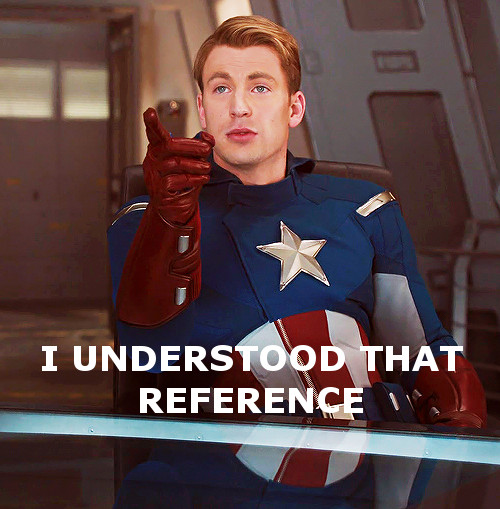
This combination of little-detail-right and big-picture-wrong is kind of indicative of what the whole film is like. As someone with an academic background in this stuff, I can say that I don’t think I’ve ever felt my sensibilities strongly catered to and so strongly attacked at the same time. The film is chock-full of references and cameos of historical figures and events which I got but I’m pretty sure none of my friends did. Much of the film’s cast is a rapid-fire sequence of “bit parts” which often have only one or two speaking lines and rarely figure into a casual reading of the Emperor’s life. There were at times I felt like I had to physically restrain myself from pointing at the screen at Andoche Junot, Thomas-Alexandre Dumas, or Hippolyte Charles, or Hortense de Beauharnais, or at Robespierre bungling his own suicide, at the Incroyables and Merveilleuses at the Bal des Victimes, and Josephine lying about her age on her marriage certificate to seem four years younger and going “I understood that reference!”
Me, like every fifteen seconds.
At the same time, the film omits a lot, and I mean a lot. The entire Italian Campaign (Napoleon’s first independent army command) was left out. So was his (or rather Davout’s) operational masterpiece at Jena-Auerstedt. Spain doesn’t so much get a mention as it does get a visual nod towards it in the sequence covering the Russian Campaign, and the entire 1813 and 1814 campaigns are omitted, with the retreat from Moscow going right to Napoleon’s first abdication at Fontainebleau. At no point are the diplomatic maneoeuvres of the Napoleonic Wars explained. One moment after Austerlitz, the Emperor of Russia is an implacable enemy, the next, he and Napoleon are signing their alliance at Tilsit. The entire War of the Fourth Coalition, which led from one to the other isn’t even mentioned. There isn’t even a mention that a Kingdom of Prussia exists until a scene in the Congress of Vienna on the eve of Waterloo.
In a different kind of story, these would be glaring omissions, because they set up the geopolitical context for Napoleon’s wars. They explain why France was at war with one country or another in any given year. They set the stakes for the battles, and help explain why this petty dickhead still ended up so beloved by so many of his people and so many of his troops to the point where he could talk down every army sent to stop him when he returned from Elba.
But that’s not as important in this case, because that’s not the story Scott’s Napoleon is telling.
Ultimately, I think Napoleon would be better titled Napoleon & Josephine, because that’s what the movie’s about at its core: not Napoleon-the-General or Napoleon-the-Statesman, but Napoleon-the-Man, in comparison to, in contrast with, and often in a mutually abusive relationship with Josephine-the-Woman – and Vanessa Kirby’s Josephine de Beauharnais really is the deuteragonist of this film. Not only does she have the second most amount of screentime, but the narrative thesis of the film is more or less that a lot of Napoleon’s decisions basically serves as a reaction to her actions: he returns from Egypt to break up her affair with Hippolyte Charles. He returns from Elba because she’s seen dancing with Tsar Alexander of Russia. Scott even moves up the date of her death by a year, so it can be contemporary with the Hundred Days, adding a tragic conclusion to their mutual story which is ahistorical, but does represent the sort of devotion which he had for her (although whether she had the same for him is arguable). The amount of time spent on their bedroom activities, and Napoleon’s stream of extremely horny letters (historically accurate. In Italy, he wrote her once a day) make it clear that this relationship is supposed to be the focus of the film, and its hot-and-cold, occasionally supportive, but ultimately toxic nature is the throughline of its narrative. The battles, the speeches, the (extremely truncated) portrayals of the political and military context, they’re all set-dressing.
Which is kind of the problem.
I’ve said previously of The Last Jedi that it’s a movie which should have been either half an hour shorter or an hour longer, and I feel sort of the same thing about Napoleon. The battle scenes are over-simplified Hollywood spectacle which bears no resemblance to the reality of early 19th century linear warfare and while I can figure out why Napoleon is shouting certain things at certain points because I can play the basic moves of the Battle of Austerlitz in my head, I guarantee you that 99% of theatre-goers can’t, and should not be expected to. As for the likewise over-simplified depiction of the procession from Committee of Public Safety to Directory to Consulate to Empire, it seems to exist just to remind us that yes, this is supposed to be a historical epic.
I do understand the need for spectacle in this case, and I can easily understand why Scott decided that he needed to keep those battle scenes in, because that’s what would broaden the appeal of the film. When most people think of Napoleon, they think about the military genius, and you can’t show that off without showing battles – and you need that wide audience to make back the budget. Yet I think this becomes a self-defeating premise, especially since I suspect a lion’s share of that budget went to the extras and effects meant to give those battles an epic scale.
I think it’s trying to meet those expectations while shoving everything into a feature-film runtime is really what brings the movie down. What could have been a relatively taut character study about two fascinating, deeply flawed, and mutually toxic individuals in the context of historical memory instead becomes bloated and full of downright silly scenes and sequences of men in historical costume talking to each other about stuff which most audience members do not care about (I could hear the guy behind me snoring in the scene where Napoleon, his younger brother Lucien, Abbé Sieyes, and Roger Ducos were setting up the Triumvirate of Consuls). Alternatively, what could have been a sweeping miniseries (like the one France2 put on twenty years ago, but with more budget, better acting, and a more firm artistic vision) is instead cut down to the point of almost incomprehensibility at some points, like a skeleton without any joints.
Which is all to say that Napoleon could have been a great mid-low budget intimate character study of a film, or a massive sweeping historical epic of a miniseries, and it ends up being something in the middle, which is somehow less than either. Knowing Ridley Scott, I’m sure there’s a director’s cut which is five hours long which will fulfill more of the expectations of the latter – but that isn’t the version I saw in theatres today.
Is this a film I regret watching? Not really. I had fun picking out those historical references and cameos. Do I think a lot of other people regret watching it? Absolutely. Do I think some of their reasons for not liking it are good?
There are absolutely people who wanted to watch a hagiography about a Great Man of History and came out disappointed – people who came in expecting myth and not history. I don’t think that someone who wanted a propaganda piece about a paragon of masculine martial prowess only to find out that – yes, a guy who wrote self-insert fanfiction about him and his ex does was in fact, something of a repressed weirdo – is someone whose criticisms should be taken too seriously. However, that doesn’t mean there aren’t good reasons for a lot of people to be disappointed and good reasons for those people to want their money back. It’s definitely not the story I would have told either.
Last month, I did an interview with Aaron Spelker of Mobile Accessible Games in advance of the upcoming release of Lords of Infinity. We talked about how I got into writing Interactive Fiction, some of the “big picture” themes I outline in the Dragoon Saga, and about parts of my creative process, as well as how easy it is for accessibility concerns (like playability for the visually-impaired) to slip under the radar of abled or mostly-abled game developers (read: me).
The interview’s up on Youtube, where you can listen to it in its entirety (so long as you don’t mind my terrible webcam picture quality and cheap microphone).
You can find Aaron on Twitter, and his Mobile Accessible Games group in Facebook. He also has a whole load of interviews with other game developers on his Youtube Channel.
I’m going to try to be brief here, mostly because I’m typing from my phone.
This is because my computer just died.
It’s an old machine and most of its internal components date from about 2013, so it’s hardly a surprise. I’ve actually been counting on the money from Lord’s of Infinity‘s release to help but a new PC, and all my work is safely backed up on a cloud server, so needless to say, it’s timing is more inconvenient than disastrous.
That being said, definitely expect delays this month – hopefully only for a few days, but definitely for a while.
Update, Aug. 16th: My computer has now been fixed, thanks to the time and effort of some close friends. While there’ll still be a few delays, we should be back on track.

 Paul Wang